New Updates GMRRmulator: Latest Features, Performance Fixes, and What’s New
New Updates GMRRmulator is all about the latest changes people are seeing in the GMRRmulator name, with the main focus on speed, stability, interface cleanup, and broader support. The public web does not show one clear official changelog, so the safest way to read this update is as a practical guide to the changes that are being described across public pages. Those pages consistently point to performance tuning, bug fixes, better usability, stronger security, and wider compatibility.
That matters because users do not judge software by version labels alone. They judge it by how fast it opens, how often it crashes, whether settings save, and whether the interface still feels easy after a long session. Google’s own emulator docs show the same pattern: updates tend to focus on fixes, performance, and support for current systems, while hardware and VM acceleration are key to better speed.
This update will matter most to people who want a smoother setup without constant tweaks. Beginners get a cleaner first run. Power users get more control. Performance-focused users get fewer slowdowns and less stutter. That is the core promise behind the latest wave of GMRRmulator changes in the public descriptions.
What Is New Updates GMRRmulator?
New Updates GMRRmulator refers to the latest changes tied to the GMRRmulator name, which appears in public pages as an emulator-like or simulation-style tool with a strong focus on updates, fixes, and performance work. One indexed page describes it as a platform for simulation and emulation tasks, while other pages use the name for update guides and feature roundups. The public web is mixed, so it is best to treat the name as a topic around a software update rather than a fully clear, official product page.
At a basic level, this kind of software solves a simple problem: it helps users run, test, or simulate an environment without relying on the exact original setup every time. Google’s Android Emulator docs describe the same general idea by showing how an online virtual device can stand in for physical hardware during testing. That is why updates in this category matter so much. A small fix can change how the whole tool feels.
Users watch updates closely because emulator-style software tends to expose small flaws fast. A tiny delay in startup, a driver mismatch, or a poor memory handoff can lead to lag, stutter, or a crash. Google’s troubleshooting guidance even says that if the emulator performs poorly, hardware acceleration may need to be configured. That is a strong sign that performance tuning is not optional in this space.
What’s New in the Latest GMRRmulator Update?
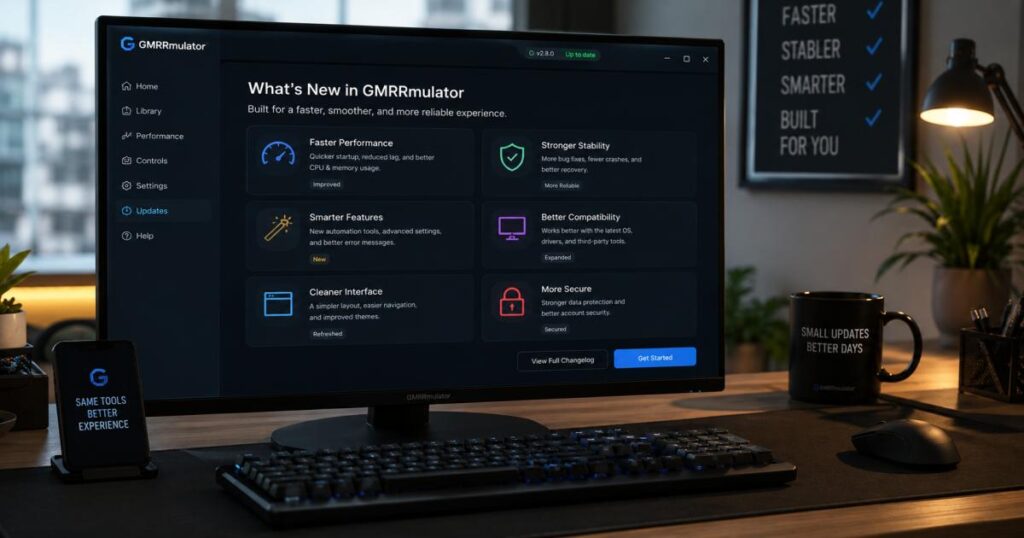
The newest public descriptions of GMRRmulator point to five major changes: new features, performance gains, stability fixes, UI cleanup, and broader compatibility. That is the same overall pattern seen in mature emulator products, where the best updates are the ones that make daily use calmer and faster rather than just adding noise.
New features added
Public write-ups about the latest GMRRmulator release mention stronger automation, better customization, improved data handling, and smarter error messages. Those descriptions suggest the update is trying to reduce repetitive work and make the tool more useful for different kinds of users. A few pages also point to future plans around AI features, cloud support, and deeper personalization. Since there is no single official changelog in the search results, these claims should be read as public descriptions rather than final vendor notes.
Performance improvements
Performance is the strongest theme in the update story. The public pages say the tool now loads faster, uses CPU and memory more efficiently, and feels smoother under load. One page says the latest update reduces lag and increases speed, while another says the platform handles demanding tasks with less strain. That matches official emulator guidance, where graphics acceleration and VM acceleration are used to improve rendering and execution speed.
Stability and bug fixes
The latest public coverage also stresses stability. The update is described as fixing crashes, improving recovery behavior, and making the software more reliable during long sessions. Google’s emulator release notes show why this matters: many of the most important updates are small fixes to shutdown behavior, support paths, audio, and known issues. In software like this, the quiet fixes often matter more than the visible ones.
Interface or usability changes
The interface appears to have gotten a cleanup too. Public pages mention a simpler layout, better spacing, clearer menus, smoother dark and light mode switching, and better response across screen sizes. That kind of work does not always sound dramatic, but it often changes how long people stay with a tool. If users can move through settings faster, the whole product feels lighter.
Compatibility upgrades
Compatibility is another major part of the update. The public pages say the new version works better with modern operating systems, third-party tools, and broader APIs. That matters because software that depends on hardware, drivers, and system services can break quickly when the surrounding environment changes. Google’s emulator docs also show how much compatibility depends on platform support, virtualization, and system setup.
Performance Fixes in GMRRmulator
Faster loading and startup
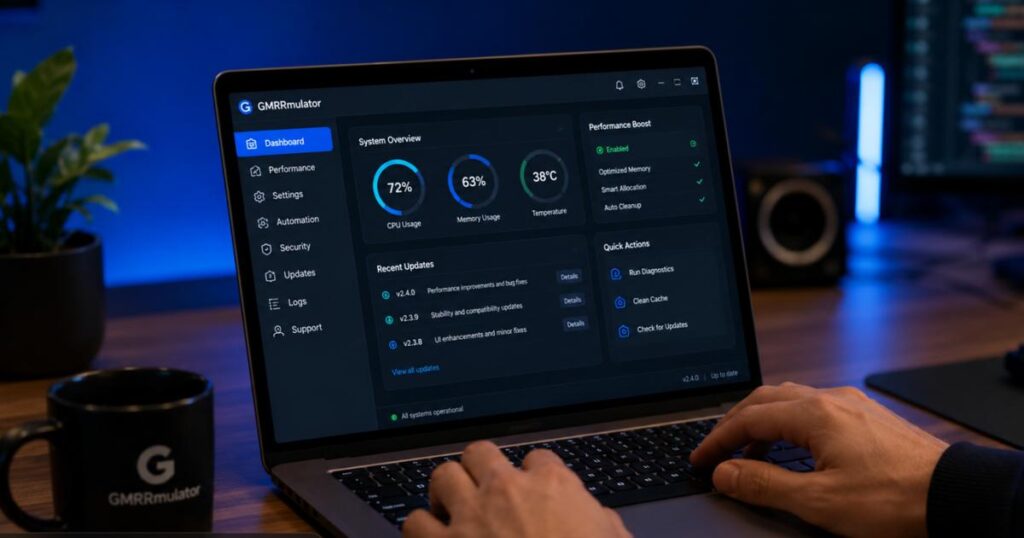
The latest update is described as cutting load times and making startup feel quicker. That matters because startup speed sets the tone for the whole session. If the tool opens slowly, users feel it right away and start looking for another option. The public GMRRmulator pages specifically call out faster access and quicker response after the update.
Reduced lag and stutter
Lag and stutter are some of the most common pain points in emulator-style tools. The public update coverage says the new version reduces those problems by using resources more wisely. That fits Google’s own guidance, which says hardware acceleration improves rendering and execution speed, and that poor performance often points back to acceleration settings.
Better CPU and memory handling
The update pages also say the software now handles CPU and memory more intelligently. That is important because emulator-style tools often run beside online browsers, chat apps, editors, and background services. If memory use is careless, the whole machine can feel slow. Better resource handling usually leads to a steadier experience across the board.
Improved multitasking behavior
One of the more useful claims in the public material is better multitasking behavior. The newer build is said to stay more stable while several tasks are running at once. That kind of improvement matters for users who do not open a tool only once a day. It matters even more for people who keep long sessions open and switch between jobs often.
Smoother overall response under heavy use
The clearest sign of a solid update is how the tool behaves under stress. The public descriptions say the latest GMRRmulator release feels smoother during demanding use, with fewer bottlenecks and fewer slowdowns. That is the kind of improvement that users notice after an hour, not just in the first minute.
Feature Breakdown: What Each Update Changes
Core engine or processing improvements
The public pages say the core engine now processes tasks more efficiently and handles data with less waste. In plain terms, that should mean fewer delays and better consistency when the software repeats the same job over and over. Core changes like this are often invisible, but they are usually the reason a newer version feels better.
New controls or advanced settings
The latest update is also described as giving users more control. That includes more settings, more tuning options, and better ways to adjust the tool for different needs. This is a good sign for advanced users because it means the software is not locked into one narrow setup.
Customization options
Customization is a big deal in software that tries to serve both casual users and power users. The public pages suggest that GMRRmulator now gives people more ways to shape the experience, from display choices to workflow behavior. That kind of flexibility helps users find a balance between speed and comfort.
Automation or workflow improvements
The update coverage also points to more automation. That means less repeated manual work and faster movement through common tasks. If the public descriptions prove accurate in real use, this could be one of the most useful changes in the latest build because it saves time every day instead of only once in a while.
Better error handling and notifications
The new version is said to show better errors and clearer alerts. That is more important than it sounds. Clear error messages help people fix problems faster, while vague ones waste time. Google’s emulator documentation follows the same logic by separating release notes, known issues, and troubleshooting steps so users can find answers faster.
UI and User Experience Improvements
Cleaner layout
The public update pages describe a cleaner layout with better spacing and simpler visual structure. That usually makes the software easier to scan and less tiring to use. When an interface gets cleaner, the tool often feels newer even if the basic function has not changed much.
Easier navigation
The latest release is also described as easier to move through. That means users should be able to find tools, menus, and settings faster. This matters more than many people think because poor navigation creates friction every time a user opens the app.
Better readability on different screens
The public material says the interface now adjusts better to large displays and smaller screens. That is useful because users do not all work on the same setup. A readable interface across screen sizes usually means fewer squints, fewer misclicks, and less annoyance.
Theme or display changes
The new dark and light mode transitions are another small but real quality-of-life fix. Simple display changes can reduce eye strain in longer sessions. They also make a product feel more finished because the details work as well as the big features.
More responsive controls and menus
The latest version is described as reacting faster when users click menus or switch controls. That is a key part of trust. When a button responds fast, the tool feels stable. When it hesitates, users start to doubt the whole system.
Compatibility and System Support
Supported devices or systems
The public descriptions say GMRRmulator now works better across modern operating systems and environments. That is a good sign for anyone worried about older conflicts or newer system changes. Compatibility is one of the first areas to break when software gets stale.
Operating system compatibility
Google’s emulator docs make one thing clear: software like this depends heavily on the system around it. The Android Emulator is built to test apps across device types and Android versions, and the docs keep pointing users back to setup, support, and troubleshooting. That same reality applies here. Good compatibility is a moving target.
Graphics and hardware considerations
Performance often depends on graphics and virtualization support. Google says hardware acceleration improves screen rendering and execution speed, and it notes that poor performance may mean acceleration needs to be configured. That is why hardware support remains one of the first things users should check before judging the update itself.
Any known limitations
The biggest limitation right now is not a technical one. It is the lack of a single clear official source in the public search results. Some pages describe GMRRmulator as a software platform, while the main indexed site under the name also looks like a content site. Because of that, users should treat detailed claims with care until a clearer vendor page appears.
Best settings for smoother use
The safest general setup is the usual one: keep the system updated, turn on hardware acceleration if your machine supports it, close heavy background apps, and start with default settings before making advanced changes. Google’s emulator guidance supports that approach because acceleration and clean setup are central to better speed.
Security and Reliability Updates
Safer data handling
The public pages say the new release improves data protection and encryption. That is a meaningful claim, but it still belongs to the public descriptions rather than a confirmed vendor changelog. Even so, the direction is sensible, since modern tools are expected to protect your saved settings and transferred data.
Authentication or access changes
The same pages mention stronger access control and broader multi-factor support. If true in practice, that would help reduce unwanted access and make the tool safer for shared or connected use. Security updates like this are often less visible than new features, but they matter a great deal.
Patch-level improvements
Patch-level changes are the small fixes that keep the whole system from fraying. Google’s emulator release notes show this well, since many updates focus on closed issues and specific bug fixes instead of major redesigns. That is also the most believable way to read a release like this one.
Crash prevention and recovery behavior
The latest GMRRmulator coverage says crashes are less likely and recovery is better if something does go wrong. That matters because a tool earns trust when it can fail cleanly and recover without wrecking the session. Better shutdown and recovery behavior are standard signs of a healthier build.
How to Update GMRRmulator Safely
Check your current version
Before updating, check the version you already have. That gives you a clear reference point if something changes after the install. It also helps you tell whether the new build actually loaded the way it should.
Back up important settings
Save your custom settings first. That simple step can save time if the update resets a layout, changes a config file, or causes a bad import. In software with deep settings, backups are cheap insurance.
Download or install the latest release
Use the latest build from the source you trust most, and make sure your machine meets the needed system requirements. For emulator-style tools, setup matters because the software depends on the system beneath it. Google’s docs keep pointing to acceleration and platform setup for that reason.
Restart and verify the update
After the install, restart the app and, if needed, the machine. Then open the main screen and confirm that the version changed. This basic check catches many small install issues before they turn into bigger ones.
Confirm that all features work correctly
Do a quick test run after the update. Open the features you use most, check your saved settings, and make sure the response feels normal. That kind of check is often enough to tell whether the update is a help or a problem.
Common Problems After Updating & How to Fix Them
App not launching
If the app will not open, check system requirements, driver health, and virtualization support first. Google’s troubleshooting docs for the emulator point users back to setup and acceleration when the tool fails to run well.
Slower-than-expected performance
If the new version feels slower, close heavy background apps and check acceleration settings. Performance problems in emulator-like tools often come from the system around the app, not the app alone.
Settings not saving
If settings do not save, check permissions, confirm the config path, and restore your backup if needed. A failed save usually points to a file issue, a permission issue, or a bad partial install. The better error handling mentioned in the update should also help narrow it down.
Compatibility issues
If another program or driver conflicts with the update, check whether a newer OS build, driver, or graphics stack is needed. Compatibility issues are common in this kind of software because it sits close to the operating system and hardware layer.
When to reinstall or roll back
Reinstall if the install looks incomplete or a major file seems broken. Roll back if the new version clearly hurts your setup and you have a safe earlier build to return to. Google’s release notes and troubleshooting pages make it clear that fallback plans are normal in this software category.
Is the New GMRRmulator Update Worth It?
Best for beginners
Yes, if the public descriptions are accurate. The simpler layout, better errors, and easier navigation should make the tool less confusing for new users. That is a real win because beginners usually struggle most with clutter and unclear steps.
Best for power users
Power users should like the extra control, deeper settings, and automation changes. The update appears to move in that direction, which is helpful for users who want to shape the tool to their own workflow.
Best for performance-focused users
This is the strongest reason to update. The public material repeatedly points to faster startup, lower lag, better memory use, and smoother multitasking. That is exactly what performance-focused users care about most.
When you should wait before updating
Wait if your current setup is stable and you need the app to keep behaving exactly the same way it does now. Since the public details are mixed and no single official changelog is clear in the search results, a cautious test install is the safer path for critical use.
Comparison: New Version vs Older Version
Speed
The new version is described as faster and lighter on resources. Older builds are not described in the same level of detail in the public pages, but the point of the update is clearly to reduce delay and make the experience feel quicker.
Stability
The newer build seems stronger on stability, with fewer crashes and better recovery behavior. That is the kind of improvement users notice most after a long session, not just during the first few minutes.
Features
The newer version appears to add more automation, better control, and more connection options. That gives it more real use than a plain maintenance release.
Ease of use
The latest build looks easier to use because the layout is cleaner and the menus are easier to move through. That matters because good software should save effort, not create more of it.
Overall value
Overall, the new version looks more useful than an older one if you care about smoother daily use, better performance, and fewer interruptions. The public sources point in that direction again and again.
Future Roadmap: What Users May Expect Next
Possible upcoming features
The public descriptions point to more AI support, deeper personalization, and cloud-based features in later releases. Those are the main future-facing ideas mentioned in the search results.
Likely performance goals
Future updates will likely keep pushing speed, responsiveness, and resource efficiency. That is the most natural next step after a release that already focuses on lag reduction and smoother use.
Expanded compatibility
Broader system support is another likely goal. Since the current update already claims better compatibility with modern operating systems and tools, the next release will probably keep extending that reach.
More refinement in the next release cycle
The next cycle will probably focus on cleanup and polish rather than a full rebuild. That is how many mature tools improve: they trim friction, close gaps, and make the useful parts easier to reach.
Frequently Asked Questions
What is the latest update in GMRRmulator?
The latest update appears to focus on speed, stability, interface cleanup, compatibility, and better error handling. Public pages give a similar picture, though there is no single official changelog in the search results.
What new features were added?
The public descriptions mention automation, customization, better data handling, stronger notifications, and future plans around AI and cloud support.
Does the update improve performance?
Yes. The update is repeatedly described as faster, smoother, and better at handling CPU and memory use. Google’s emulator docs also show that acceleration settings are central to performance in this kind of software.
Is it safe to install the latest version?
It is usually safe if you back up settings first and check your system requirements. Because the public information is mixed, a cautious test install is the smarter choice for important setups.
How do I fix issues after updating?
Start with a restart, check acceleration and driver support, confirm settings saved, and look for known issues. Those are the first steps Google recommends for emulator troubleshooting, and they fit this kind of software well.
Should I update right away?
If you want better speed and a cleaner interface, updating makes sense. If your current setup is stable and you cannot risk a change, test the new version first before moving fully over.
Final Thoughts
New Updates GMRRmulator is best understood as a release story about speed, stability, cleaner design, and broader support. The public pages point to faster startup, fewer slowdowns, better resource handling, clearer errors, and a more useful layout. That is the kind of update most users want because it changes daily use, not just the version number.
The strongest practical takeaway is simple: this update looks worth testing if you want smoother use and better performance, but it is smart to back up your settings first because the public information is still mixed and no single official changelog is easy to verify. A careful install gives you the best chance of keeping what works while trying the newer build.