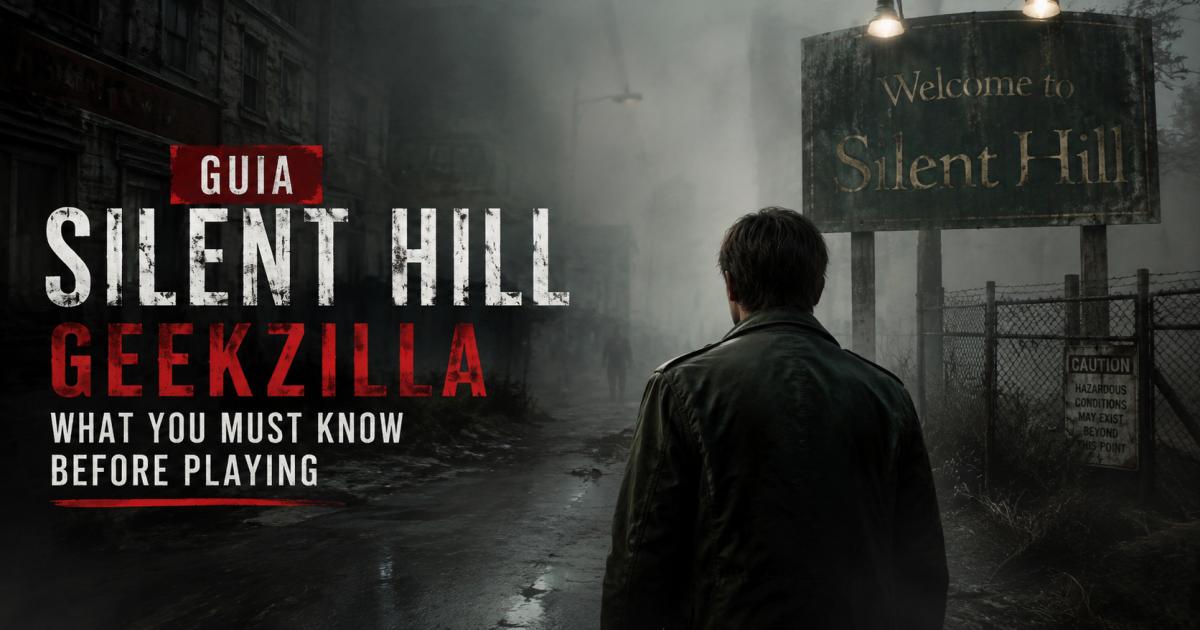
Guia Silent Hill GeekZilla: What You Must Know Before Playing
The thick, white mist rolling across your screen hides some of the most iconic nightmares in gaming history. Navigating this town requires more than quick reflexes; it demands careful planning and resource conservation. This Guia Silent Hill GeekZilla provides a strict, spoiler-free roadmap to help you survive. We will show you how to manage scarce ammunition, solve cryptic puzzles, and maintain your sanity through the twisting corridors of one of the best psychological horror games ever made.
The Origins of the Nightmare
To survive in the town, you first need to understand how it was built. Created by Konami’s “Team Silent” in 1999, the original game faced strict PlayStation hardware limitations. The developers simply could not render a massive, detailed 3D town all at once. Their solution was to cover the entire map in a thick, oppressive fog.
This 1999 hardware limitation accidentally birthed the franchise’s defining psychological dread. Because you can only see a few feet ahead, your brain fills the unseen space with terrifying possibilities. Over the years, the series transitioned to modern platforms, but that core design philosophy remains untouched: what you cannot see is always more frightening than what you can see.
The game forces you to alternate between two distinct realities:
- The Fog World: Your baseline reality. It is highly isolating and quiet. Here, you spend your time exploring empty streets, reading maps, and gathering supplies.
- The Otherworld: Without warning, the fog vanishes. The environment shifts into peeling wallpaper, industrial chain-link fences, rust, and dried blood. The danger level spikes massively, and enemies become highly aggressive.
The Core Guia Silent Hill GeekZilla Survival Strategy
Combat vs. Flight: Mastering Resource Management
You are not a highly trained soldier. The protagonists of these games are usually everyday people, writers, clerks, or grieving parents. They are clumsy and slow. Fighting every monster you see is a fatal mistake.
On average, engaging in unnecessary melee combat drains a significant portion of your health, and killing a standard monster yields absolutely no rewards. Combat is strictly a last resort. Your primary survival tips for Silent Hill include mastering the art of running away. When you spot a twitching creature in a narrow hallway, check your map to find an alternate route. Save your handgun bullets and health drinks exclusively for mandatory boss encounters.
Navigating Blindly: The Pocket Radio and Flashlight
Early in your journey, you find two essential tools that define the gameplay loop: a pocket flashlight and a broken portable radio.
The pocket radio emits harsh static whenever a monster approaches. The louder the static, the closer the threat. This audio cue allows you to navigate blind corners safely. The flashlight lets you read your map and spot items shining in the dark. However, light attracts monsters.
Because of the thick fog originally born from those 1999 hardware limitations, your vision is already impaired. Turning off your flashlight when you hear radio static is a vital strategy. Sneaking in pitch darkness often allows you to walk right past enemies without triggering an attack.
Key Locations You Will Encounter
Central Streets and Map Reading
Your journey begins in the sprawling streets of Central Silent Hill. The roads are broken, and sudden drop-offs frequently block your path. The in-game map is your most critical tool. The protagonist automatically marks blocked paths with a red line, allowing you to track exactly where you can and cannot go. Explore alleys, check the trunks of abandoned cars, and search the porches of houses to find hidden first aid kits.
Brookhaven Hospital: The Shift to Terror
Eventually, you will move indoors to explore Brookhaven Hospital. This location is a staple in any Silent Hill beginner guide. The hospital features tight corridors, endless identical rooms, and the iconic nurse enemies.
Systematically check every room on a floor before moving to the next. When Brookhaven inevitably shifts into the Otherworld, the basic layout remains the same, but the walls pulse with rust, and deadlier creatures spawn in previously cleared rooms. Rely heavily on your map markings to escape.
Toluca Prison: Absolute Darkness
Toluca Prison tests your nerve. The environment relies on absolute, suffocating darkness. The hallways are exceptionally long, and enemies hide entirely in the shadows. Move slowly, listen to your radio, and do not run blindly into the dark.
Solving Twisted Puzzles and Riddles
This franchise functions like an escape room wrapped in a nightmare. The puzzles expect you to think critically and interpret environmental clues.
Often, you must decipher cryptic texts and folklore. For example, the famous piano puzzle in Midwich Elementary School requires you to read a poem about flightless birds to determine which silent keys to press.
You also need to combine seemingly useless items. A piece of wax, a lighter, or a strand of hair will sit in your inventory management screen until you find the right environmental prompt. If the game version allows it, select the “Normal” puzzle difficulty for your first playthrough. “Hard” difficulty requires specialized external knowledge, such as an understanding of Shakespearean plays, to progress.
Decoding the Psychological Horror
Monsters as Projections of Trauma
The monsters in the fog are not random zombies; they are physical projections of the protagonist’s psyche. Every creature represents specific guilt, repressed trauma, or deep-seated fears.
For example, Pyramid Head serves as an executioner, representing a subconscious desire for punishment. The faceless nurses reflect deep anxieties surrounding hospitals and terminal illness. Remembering that 1999 hardware limitation, the fog that hides these monsters amplifies the psychological horror. The fog acts as a blank canvas, projecting the protagonist’s worst internal fears directly into the physical world.
The Hidden Ending Mechanics
The game constantly watches your behavior. It tracks your subtle actions and dynamically alters your ending based on how you play. A comprehensive Silent Hill endings guide reveals that the system measures microscopic details.
The game tracks how often you inspect a certain letter in your inventory, how frequently you look at a specific knife, and how long you allow your health to remain in the red before healing. If you play recklessly and show signs of despair through your gameplay, you trigger a darker ending. If you fight hard to stay healthy and protect companion characters, the ending shifts positively. Play exactly how you feel, and the town will judge your actions.
Frequently Asked Questions
Q1. What is the best way to survive early on in Silent Hill?
The best early survival strategy is to avoid combat entirely. Run past slow-moving enemies, save your ammunition for boss fights, and turn off your flashlight to sneak past monsters undetected.
Q2. How does the radio work in the game?
The pocket radio emits static when enemies are nearby. You use this audio cue to gauge the distance and direction of threats, which is especially vital when navigating through the thick fog or dark corridors.
Q3. Are the puzzles the same on every difficulty?
No. Many games in the franchise offer separate difficulty settings for combat and puzzles. Higher puzzle difficulties change the clues entirely, often requiring complex real-world knowledge or advanced riddle comprehension to solve.
Q4. Does the game have multiple endings?
Yes. The game features a hidden tracking system that monitors your gameplay habits, such as how quickly you heal, which items you examine, and how you interact with other characters. These background metrics determine which ending you receive.